

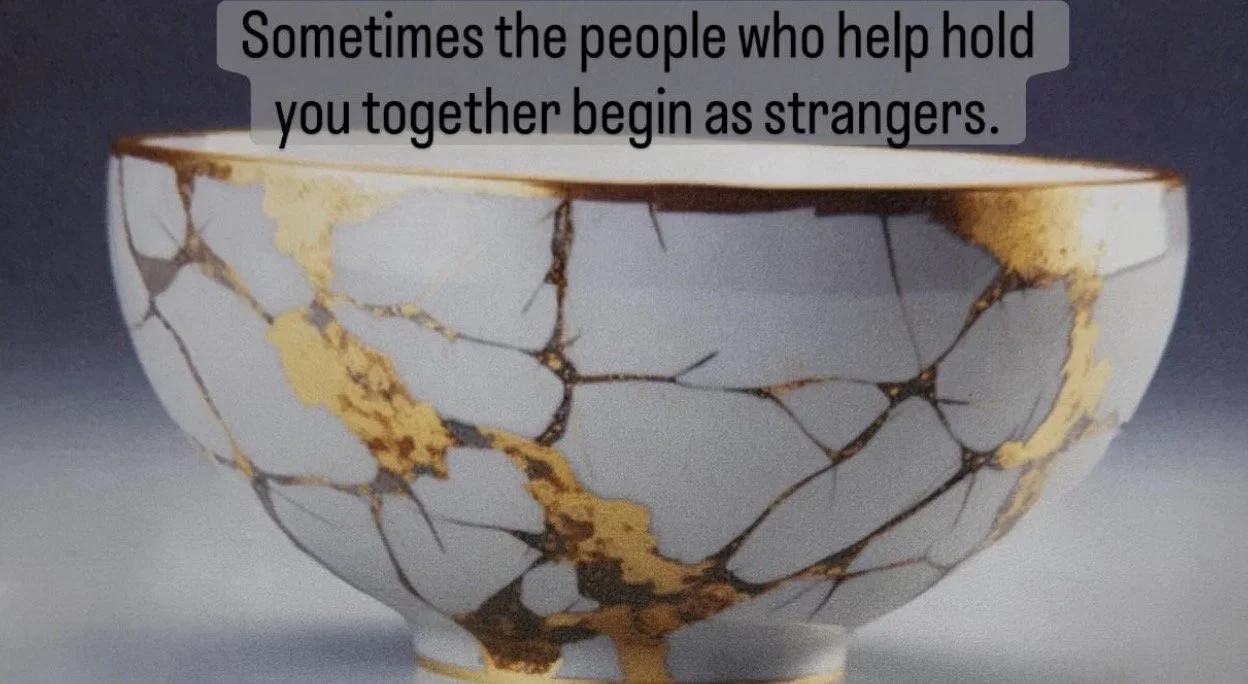
Sometimes the people who help hold you together begin as strangers.
This winter, my father passed away. Upon the recommendation of a high school friend, I started looking for a grief group and found GriefShare. The next 13-week program was starting in two weeks, and I registered immediately.
In the past, I learned that unprocessed feelings don’t just go away. They get stored until you have to deal with them later. If I’m honest, I secretly hoped I would not like the group because it interfered with a weekly class I enjoy. But once I started, I found many parallels with the Fusion Support group.
There is something powerful about being surrounded by people who are going through the same thing. Grieving a loved one, or grieving the loss of the life they once knew. No one has to explain themselves. Everyone understands the loss of words, the incomplete thoughts, and the truth that no one there is trying to fix you.
Right before our meeting yesterday, I received a text from a student who lives in another state and has only ever worked with me remotely. It felt like a full circle moment. It reminded me that we do not have to rely only on family and friends. Sometimes strangers show up in your life and take on roles that no one else in your circle could have filled, and that support becomes mutual.
In both groups, there are tears at times, but there is also laughter and joking. I appreciate the connections I have made with these strangers who are no longer strangers.
Last night, we talked about the idea of Kintsugi, the art of repairing broken pottery by honoring the cracks instead of hiding them. Its meaning is about accepting imperfections and recognizing that strength can grow from broken places.
Healing is not about putting life back exactly the way it was. It’s about learning to live with the cracks, accepting help along the way, and realizing that sometimes the people who help hold you together are the ones who began as strangers.