

Hydration, Disc Health, and What Our Grandparents Never Knew
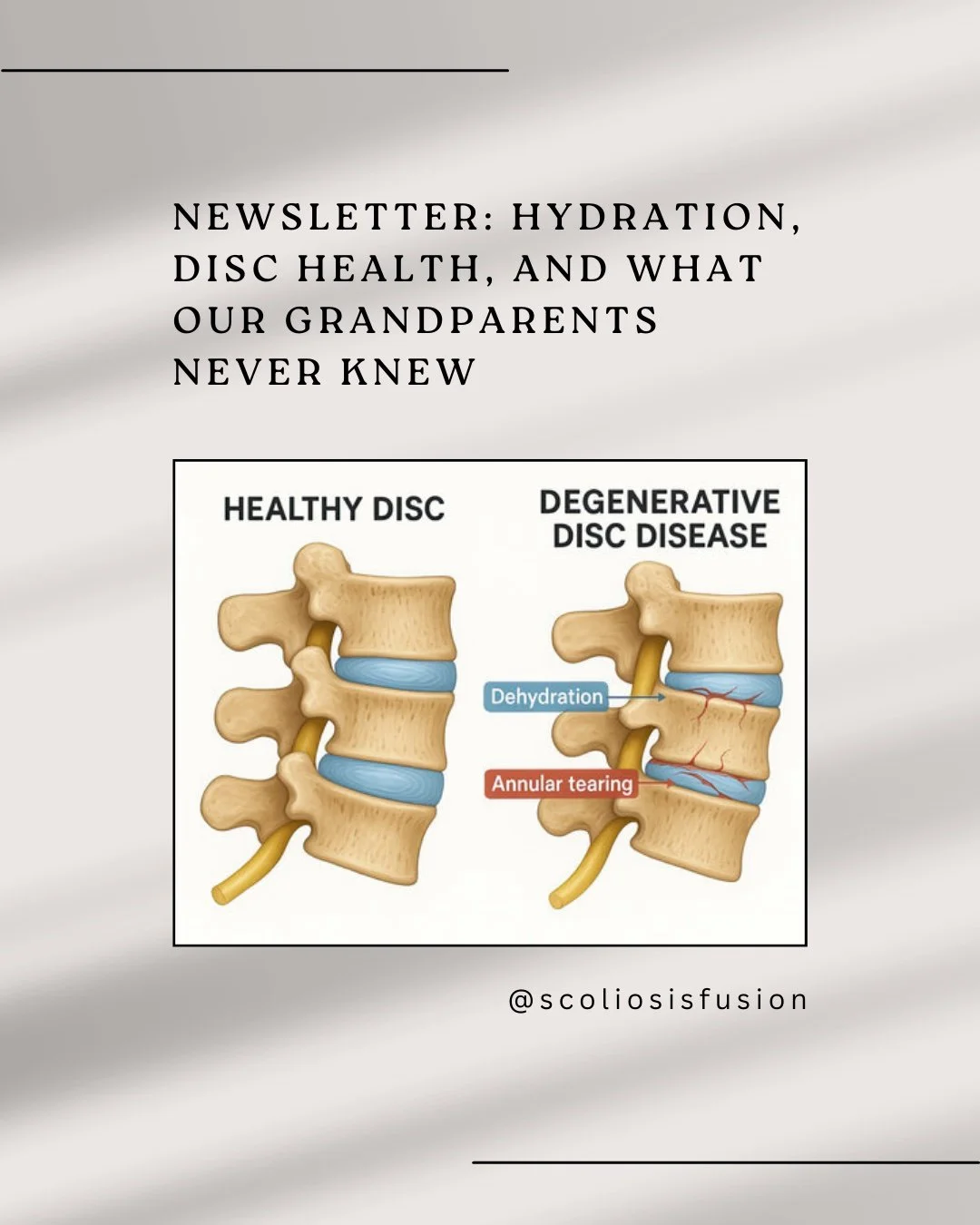
It is easy to forget about hydration once the weather cools down, but winter may actually be the time when our bodies need it the most. We often joke about how our grandparents survived without giant Stanley cups, but daily life looked very different for them. In the book Quench, I learned that modern hydration issues often come from things our grandparents never had to deal with. Our water sources are different, our food is more processed, and we spend less time outdoors where we naturally absorb hydration through movement.
Of course I like to focus on the spine here. The discs between your vertebrae help absorb shock, distribute weight, and keep you standing tall. They naturally lose some water during the day, sometimes up to 20 percent, and then rehydrate overnight. Long-term dehydration and lifestyle habits can influence how well they recover. Hydration plays a much bigger role in disc health and chronic pain than many people realize.
A few ideas from Quench that really stuck with me:
Even a small drop in hydration can affect cognition. Two percent dehydration can lead to brain fog.
When the body is dehydrated, water is reserved for the brain, heart, and essential organs. This means tissues, joints, and fascia often miss out.
Water from whole foods hydrates better than plain water. For example, an apple with water hydrates better than two bottles of water because the fiber holds water in your system longer.
Minerals matter. Most bottled water is stripped of them, and tap water can contain chemicals. Minerals help balance fluid inside and outside of cells.
Natural salts like sea salt or Celtic salt can support hydration. A small pinch in water can help bring electrolytes back into balance.
Hydration also improves fascia health, which helps move water through the body. Gentle movement like walking, yoga, Pilates, bouncing, or dancing helps your fascia transport water where it is needed.
If you want to read more on this topic, Quench is an excellent read. And if you want guidance on breathing and movement that supports your spine, I would love to work with you.