

Why I woke up crying
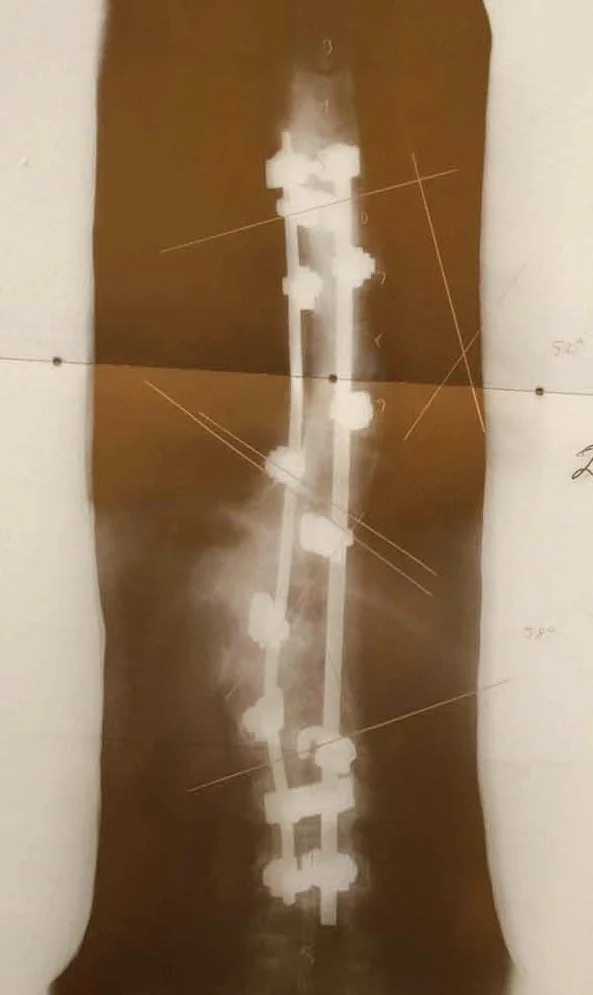
I woke up crying last night, and it took me a moment to understand why. The feeling traced back to a day a few months ago, when my son broke his wrist.
On a warm fall day, my husband went out in the neighborhood looking for our son, and found him along our nearby greenway lying on the ground. He had been doing tricks on his scooter and fell, breaking his wrist. As parents, this was our first experience with a broken bone or a visit to the ER. I felt collected, decided which ER to go to, and drove our son there while my husband followed in his car. I told myself that this happens all the time and we were going to deal with it.
Once our son was put into a room in the ER and the doctor, nurses, and tech were doing their job, I started to feel a new wave of emotion. Seeing my son in a hospital bed, fearful and in pain, hit me in a way I wasn’t expecting. The doctor mentioned a possibility of surgery, and that word stuck in my son’s head. His eyes were full of tears when he said that he didn’t want surgery.
I’ve never broken a bone, so I didn’t know the protocol, and I was surprised when they said they were giving morphine for the pain. I remember morphine very well from my spinal fusion surgeries. I looked forward to it running out, because the nurses would give an extra amount along with the next dose when they replenished the meds. If you ask me what I did in the hospital for those three weeks when I had my surgeries, I mainly remember looking at the dots in the ceiling and pressing that morphine button.
The hospital bed, my son’s small body, and his tears flooded me with memories of being on that end of the bed when I was a teenager. I would have taken his pain in a second if that were possible, because it would have been better than watching him in pain.
They gave him other medications, and he still couldn’t tolerate the pain when they attempted to reset his bones. They talked about giving ketamine, and another nurse came in to monitor his heart rate while he was on the drug. I was so scared and felt like everything was happening so fast. When he was out, I wondered for a moment if he was dead, and then felt reassured when I saw that he was hooked up to monitors to check his heart. Even though he was out, he still screamed in pain.
When I woke from one of my spinal fusion surgeries in the ICU, I remember screaming in pain about my leg. My left leg hurt for a while, and the doctors couldn’t figure out what had happened.
My mind was seeing my son in pain and my body was reliving my own experience, but I also had the new perspective of being a parent in this situation. It’s hard to be a patient, but I never considered what my parents were going through when I had my surgeries. Only as an adult, decades later, and with a child of my own, can I begin to grasp how gut wrenching that experience must have been for my family.
This experience with my son really shook me up, like shaking a snow globe of distant memories and feelings that had been deeply stuck. I wanted to talk to someone about it in the following days who would empathize with what I was experiencing. I know many people with spinal fusions who have gone through that experience, but the ones I felt close enough to randomly text had no children. I thought about journaling my feelings, and maybe I did briefly, but I really wanted to share with someone.
I hadn’t shared these feelings with my mom, but I didn’t have to. Somehow, she already knew. We were talking on the phone recently and she brought up how hard it was to see me going through my surgeries and recovery. On her own, she compared the feeling to how I must have felt seeing my son in the ER when he broke his wrist. She knew exactly how I felt, because that comes from being a parent and living with your heart outside of your body.
In another part of the conversation, she shared how I was unaware of what was happening with my first anterior surgery. Two weeks later, when I was going in for my posterior surgery, I was weeping so hard because I understood better what was about to happen. In the area where we were before I was taken away for surgery, there was a woman waiting with her husband, who was also about to go in for surgery. This stranger saw how upset I was and came over to console me and say a prayer.
I don’t remember any of this. This woman’s husband didn’t make it through his surgery that day, and yet she was consoling me. My mom brought up this story in the context of how these experiences really put life into perspective and what is important. My spinal fusion surgeries were 31 years ago, and I don’t remember many of the details of that time. I appreciate hearing these stories because they fill in empty gaps for me. However, they are heavy.
I was thinking about both of these stories last night as I was going to bed, and it felt like a full circle moment.
At some point, I woke up and realized that I was crying.
Crying can be viewed as sad, but also as cathartic. After all of this, I spoke to someone yesterday who also went through spinal fusion surgery as a teen. He mentioned how he had hoped that he would have closure about his back after addressing a few things last year. But he realized that it doesn’t work that way, and now he has a family member he wants to support on a similar journey. This is the back we have for the rest of our lives, and we have to work on our relationship with our back and care for it just as we would anything else we want to thrive in life. Sharing our stories and experiences also helps us not feel alone and helps make sense of our emotions.