

New beginnings this Spring!

I'm happy to finally share that I've been expanding my training and studies into pilates for scoliosis!
Learning a new movement modality had been a fun challenge. Yoga has served me very well in many ways through the decades, yet it's been a joy to add in something different. Through pilates, I've learned more about my scoliosis, experienced my 3-dimensional rotations in new ways, and have felt muscles in new ways.
In mat pilates, there's the simplicity of a mat, which similar to yoga, makes it accessible to do anywhere. However, there's such a leap of experience in using a reformer to aid in stability while challenging the body with different types of resistance work.
So far I've done training and will continue to learn from Karena Thek's Scolio-Pilates, as well as the Polestar Scoliosis Pilates course taught by Lise Stolze and Hagit Berdishevsky.
Local students may work with me at LKN Pilates where I'm teaching a scoliosis-focused yoga and pilates class series in March. It's a beautiful space with all the apparatuses you could want.
Is your desk posture causing your back pain?
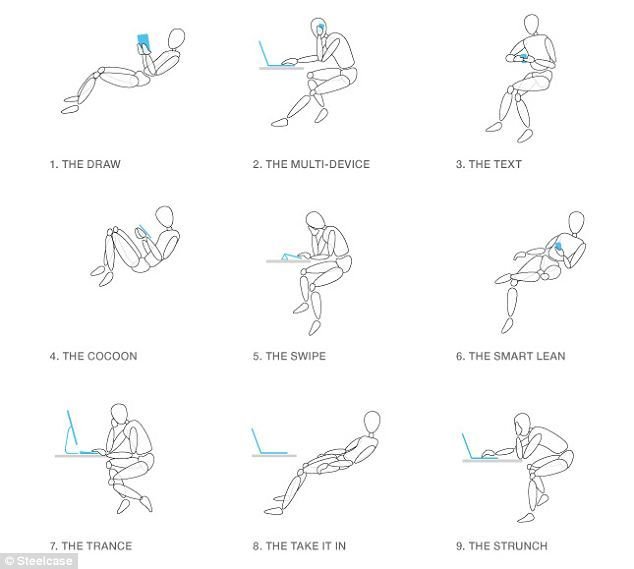
Being stuck in one posture for too long is never good for your body, and especially a seated posture for 15 hours per day. I sure hope you're not at your desk for 15 hours, but cumulatively you may be sitting that much per day with work, commuting, meals, and watching TV.
Look at how you're sitting, or, even better, have someone help you look at how you actually sit. What's the habit? Are you ever sitting on your pelvis evenly? Are you usually sitting with a tucked pelvis that causes a forward flexed spine? Your habitual seated posture matters, because it can lead to pain over time.
A yoga practice isn't about it being a workout or needing flexibility, but cultivating the knowledge and body awareness to know how you carry yourself. A day of lousy posture isn't a big deal, but what about always sitting on one hip, or slouching back in your chair, for decades? These seemingly minor tweaks in our habits do impact our bones, muscles, tissue, and breath over time.
Posture is important if you are experiencing back pain. Instead of a corrective device or popping a pill, start working on finding your inner strength and awareness to address your posture all on your own!
Detecting Scoliosis

My mild childhood scoliosis became visible when I was trying on bathing suits for Spring Break when I was a freshman in high school. If you wear baggy clothing as I did at the time, it can be difficult to notice some of the signs of scoliosis.
If you have reason to suspect scoliosis—for example, your child was told that they had a mild curve when they were younger—take a moment to look at their back periodically. If you suspect scoliosis, ask your doctor for an evaluation.
Most public schools no longer provide scoliosis screening.
Early detection offers more treatment options.
“But it feels good to stretch my curves.”
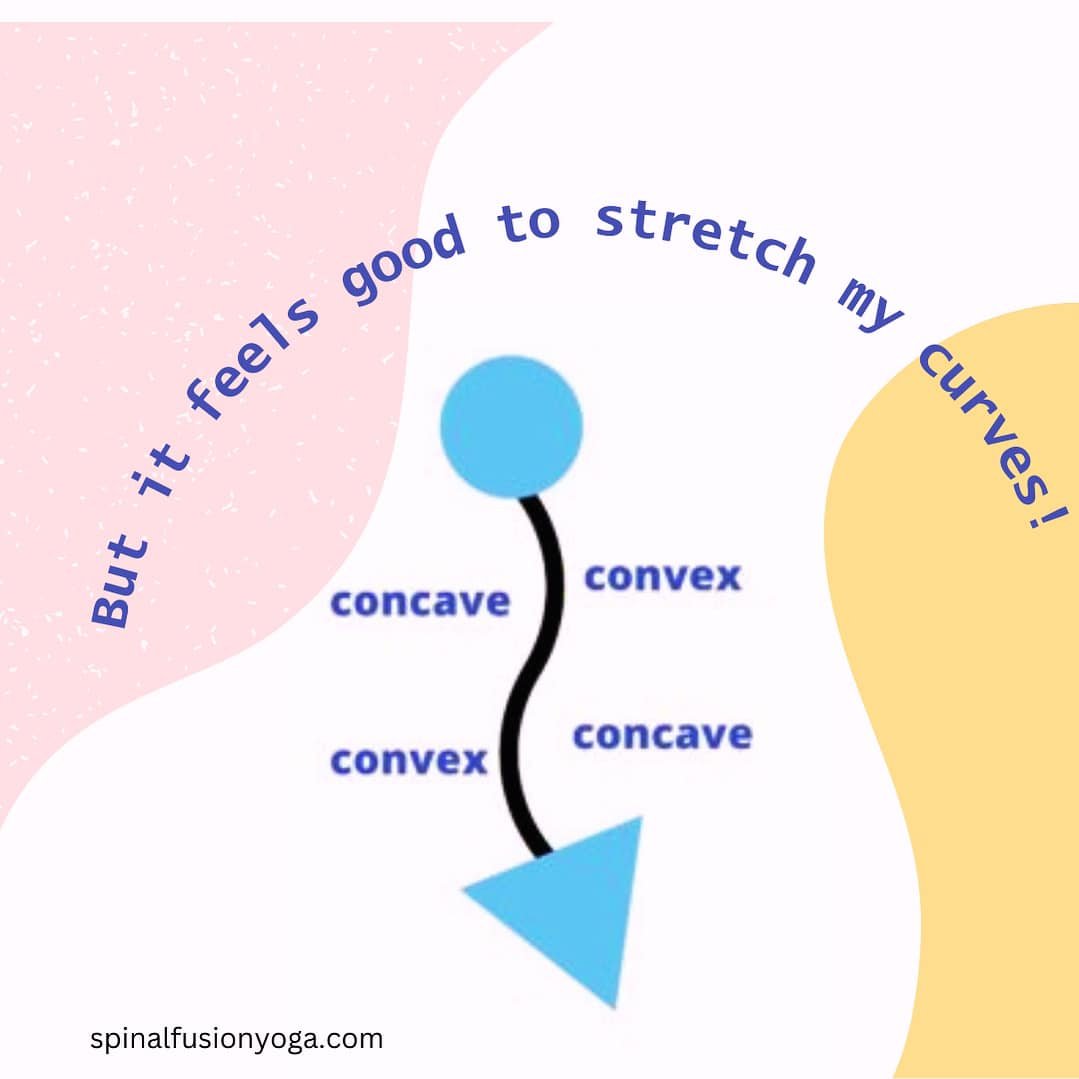
I hear this often, and you are not alone, but let me explain.
Scoliosis creates changes in the bones, as well as the muscles attached to those bones. The outer side of a curve (called convexity) has muscles that live in an over lengthened or stretched state. These muscles get tired and tight, but they need to be shortened for them to function better.
A better shift of focus is to those collapsed areas (called concavity) to work on expansion and elongation.
It takes time and practice to understand what’s happening in scoliosis, and then apply that to your unique body! Give yourself time, ask lots of questions, and keep practicing.
Feel the Feelings

Experiencing yoga for scoliosis and learning about it have honestly been a rollercoaster of emotions for me. I feel like I should mention this more often, because it can be quite unsettling when we don't have anyone to talk to who has been in the same shoes.
I remember two instances distinctly, and one brought tears of despair, while the other brought tears of joy.
The first yoga with scoliosis class that I took was for individuals with fusions. This was the first time that I was surrounded by people who had a back like mine. It was a new experience in so many ways. I physically don't see my own back, and here I was surrounded by fused scoliosis spines. I also learned that my yoga practice was not taking my spinal conditions into account one iota. After that class, I took the subway home, and balled my eyes out the whole time. I felt discouraged, betrayed, disappointed, mad, frustrated, and stupid. My boyfriend saw how upset I was, and, to my surprise, told me that I should not go back. I knew that I had to go back, because I needed to learn how to care for my back.
The tears of joy were from my first yoga with scoliosis workshop. I felt like I had finally found a needle in a haystack by getting answers and material about this subject. Gratitude skims the surface on how I felt to be empowered with the new information. I had to email the instructor, Deborah Wolk, when I got home to thank her "from the bottom of my heart."
Our body stores all those emotions from being fearful, not fitting in, maybe having to wear a brace or having had surgery, possibly dealing with pain, and just feeling like you want to have a spine like everyone else. All those feelings are valid, and I only hope that you find your path through those frustrations to feel more empowered.
Do you see a stack of books, or scoliotic vertebrae?

The vertebrae don't only move to the right or left of the midline due to scoliosis, but they also rotate toward the back body or the front body. There's a lot going on in the body, and it can change in each segment of the body, so the shoulder region may be opposite of what's happening in the lower back. We are beautifully complicated.
Just like a snowflake, nobody has curves that are created exactly the same. It's a process to learn what's going on in your own body.
Want to learn more in order to feel more balanced in your body? You may join a class, schedule a private session, or let me know if you want to have a phone call first.
Happy 29th Surgiversary!

Wow, 29 years since I had my spinal fusion surgery!
I'm proud of what I've tackled and overcome during this time, and yoga played a huge role in the process, as it will for decades to come.
A couple weeks ago, I watched a webinar by Setting Scoliosis Straight. Doctors from around the world shared their research on Long-Term Follow Up on Adolescent Idiopathic Scoliosis. Most doctors shared research on 10-years post-op, but one doctor from Spain shared a study that his mentor conducted on over 100 patients that had a spinal fusion surgery in the 1980's, so about 30-years prior. You may view this webinar on YouTube now, and I hope to see more long-term studies like this in the future.
Movement is key for EVERY BODY, so we need to find what we enjoy and can maintain.
What does Yoga with Fusions mean?

Spinal fusion is a surgery to connect two or more bones in the spine, and this connection prevents movement between those bones. In my case, I had 11 vertebrae fused.
It's important for all of us to remain active throughout our lives with walking and other activities in order to keep our bones healthy. However, the fused portion of the spine isn't moving (think of flexion, extension, or twisting), and what results is that the adjacent unfused vertebrae above and below the fusion end up moving even more. These unfused areas around the fusion are more stressed over time and at risk of degeneration.
Yoga with Fusion is about taking your entire spine into consideration, and learning how to work with a neutral spine to build strength and stability. The location and length of a fusion will determine which poses are beneficial or not for an individual.
What does Yoga with Scoliosis even mean?

That's a great question, and one that took me a while to figure out. It's much more than knowing a few pose modifications.
Scoliosis is a deviation from a straight spine, but also has a rotational component. However, the ripple effect of scoliosis doesn't stop there, because it's also reflected in the pelvis, shoulders, arms, head, legs, etc. After all, we are an interconnected body, so scoliosis isn't an isolated condition to the spine.
Yoga with Scoliosis is about learning YOUR curve pattern, and how to practice in a way that doesn't encourage more asymmetry, but works toward creating balance, retrains your proprioceptors, and helps with pain. We want to open the compressed areas, and draw the curves toward the midline, instead of further into our scoliotic pattern. Just as water follows the path of least resistance, our body will follow the posture of least resistance, so it may feel good to further stretch an over-stretched area that should actually be contracted. Conversely, it may feel less satisfying to open a compressed area where we lack sensation.
In Yoga with Scoliosis, we focus on breath awareness, and poses that encourage maintaining the natural curves of your spine, spinal elongation, strengthening limbs and muscles that support the spine, and building body awareness.
I commonly see students with scoliosis, and maybe with a fusion, who don't know much about their back. I was one of them! However, anyone can tell you that "you are right-thoracic and left-lumbar," but it takes time to internalize that information into your own being. It's okay! We all get confused, it takes time, so ask questions and give yourself some grace.
What do YOU want to know about yoga and scoliosis or spinal fusion?

One of the reasons I decided to return to teaching yoga back in 2019 was to also make a commitment to myself. Sure, I could continue to do what I already knew about yoga and scoliosis, but I would be more committed to continuous learning if I were teaching students. My practice and teaching definitely evolve over time, and that's the best part of keeping that inner spark alive.
There's a saying about the ultimate form of learning is to teach. So that leads me to asking what you'd like to learn from me? No question is too small or too silly! Let me know what you'd like to learn, and I'll do my best to answer.
You know what the teacher used to always say? If you have a question, someone else has the same question, too!
What are chain reactions in the body?

It's the process of one movement triggering another movement in the body, such as the ripple effect when throwing a pebble into a pond. The same thing happens in the body when we take a movement in one part of the body, and that movement extends and expands throughout the body. However, this exaggerates when there's a limitation in one part of the body, and the brain will take the movement to another part of the body. This limitation could be due to tight hips, shoulder range of motion, hyperkyphosis, scoliosis, spinal fusion...
Why does this matter? It matters if these habitual chain reactions go on for years or decades, and eventually lead to chronic pain or postural issues.
Before I discovered a more mindful and alignment based approach to yoga, I was doing all sorts of yoga, and pretty well. I had practiced Ashtanga yoga for years, would do bird of paradise, wheel... yikes! I'm glad that I learned about what my chain reactions would lead to in my body. My biggest physical limitation is my fusion, and when I was practicing any x,y,z yoga pose, I was not taking into account that I was overburdening my unfused vertebrae. A goal of my practice is to feel good in my body, AND do what I can to prevent future surgeries.
Notice how you feel when you sit on the floor or reach your arms alongside your ears, for example. The outsider may say that your pose looks good, but ask yourself how it feels in your entire body.
The diaphragm

The diaphragm is the major muscle of respiration that sits below the lungs. Most of us are familiar with its dome shape, but did you know that it attaches to vertebrae in the lower thoracic and lumbar areas of the spine?
Breathing dysfunction can affect the whole body. When our diaphragmatic mobility decreases, we may have more tension and less mobility in the low back.
Travel body

Although I love traveling, being stuck in a seated position for too long inevitably leads to back pain, so I have to be prepared. Traveling by car allows me to bring a few more things, such as my yoga travel mat, blocks, yoga strap, massage balls, dry body brush, and Epsom salts. Even ten minutes of movement in the morning, and a few minutes at night, make a huge difference.
I ‘ll use my Yoga Tune Up massage balls to roll out my glutes, piriformis, sacrum, feet and upper trapezius. I may also did a few dog poses and handstands, and then I feel ready to conquer a new day!
Some other things that have helped have been breaking often to take our dog on short walks, staying hydrated, and meditation & yoga nidra.
How does your body respond to travel?
Our shoulders

Every time I'd get a massage, I'd tell the masseuse that my upper shoulders were tense. I thought this area being tense was unique to me until one time I was told that it was common. If you feel like your upper shoulders are tense, and your pectoral muscles are short, then you'll love Back Health class. We incorporate self massage and mobility work to feel this area in a new way.
Those of us with scoliosis, and a curve in the thoracic spine, may have uneven shoulders, a shoulder blade that wings out, or pain. Working on moving our shoulder blades on our ribcage can help with pain and keeping the shoulders healthy.
How much attention do you give your feet?

This past week I had my first reflexology session, and it was very relaxing. As we shift into spring, I’m happy to put away my winter boots, and walk barefoot more often.
Our feet are intricately interconnected to our ankles, knees, hips, pelvis, and low back. Caring for your feet can have a bigger impact on our entire body than you may realize.
This too shall pass.

How can you savor the here and now, instead of getting caught up in the emotions of the moment? It will be different for all of us, and we need to make time for the practices that resonate with us. For some people, they may need a walk in nature, meditation, yoga, comedy, cooking, playing with a pet or a child...
Savasana
Our final posture of class is called corpse pose or savasana. Savasana is not a power nap, but a time to rest your nervous system. During savasana we have a chance to practice pratyahara, which is a Sanskrit term meaning to withdraw the senses. This practice isn't easy for everyone, but it's something to practice, just like a physical pose, in order to fully enjoy its benefits of a calmer mind and body.
AWAKEN THE BACKSIDE

Our posterior chain refers to the muscles that make up the backside of our body, and are essential to our movement and stability, yet is an area that’s often overlooked. This chain spans from the soles of the feet, up the backs of the legs, the gluteus maximus, along the spine, and up to the crown of the head.
These muscles tend to be tight and weak from too much sitting, or from an imbalance in overtraining the front body. A strong posterior chain is important in overall health, keeping the body upright, and providing stability for the spine and hips. When these posterior chain muscles are weak, we can experience back pain, poor posture, or unstable balance.
Self-Care
It takes some time to figure out what helps bring you physical relief, and especially how to care for yourself in a way to not enter that zone, or have it happen less frequently.
Movement, breath, sleep, and diet are important factors to focus on when it comes to back pain. However, there's also small actions we can take, such as daily dry brushing, which are essentially free and just take a couple minutes.
About fifteen years ago, a holistic endocrinologist suggested that I try body brushing with a natural bristle brush. I thought I was supposed to almost scrub my skin, which didn't feel good. I never kept up the practice.
When I was pregnant, my stretched skin would feel itchy, and I found a lot of relief from gentle body brushing. Since my pregnancy, I've been dry brushing daily. This practice just felt good to me, and I didn't realize that it had other health benefits.
The dry brushing action stimulates circulation of blood and lymph, which is good for circulation. Dry brushing also stimulates the nerve endings in our skin, which is incredibly important in areas that are not getting the necessary stimulation to stay healthy, such as a painful area we aren't moving. The practice is soothing and may relieve pain for some people.
I do a soft dry brushing before getting in the shower, and prefer my brush with a long handle. I love the habit so much that I also have a smaller brush to take with me when I travel. I may have even brought it camping last summer.
Some added bonuses are the exfoliation for softer skin and a lift in energy.
Try out this self-massage technique and let me know what you think.
Compassion Muscle
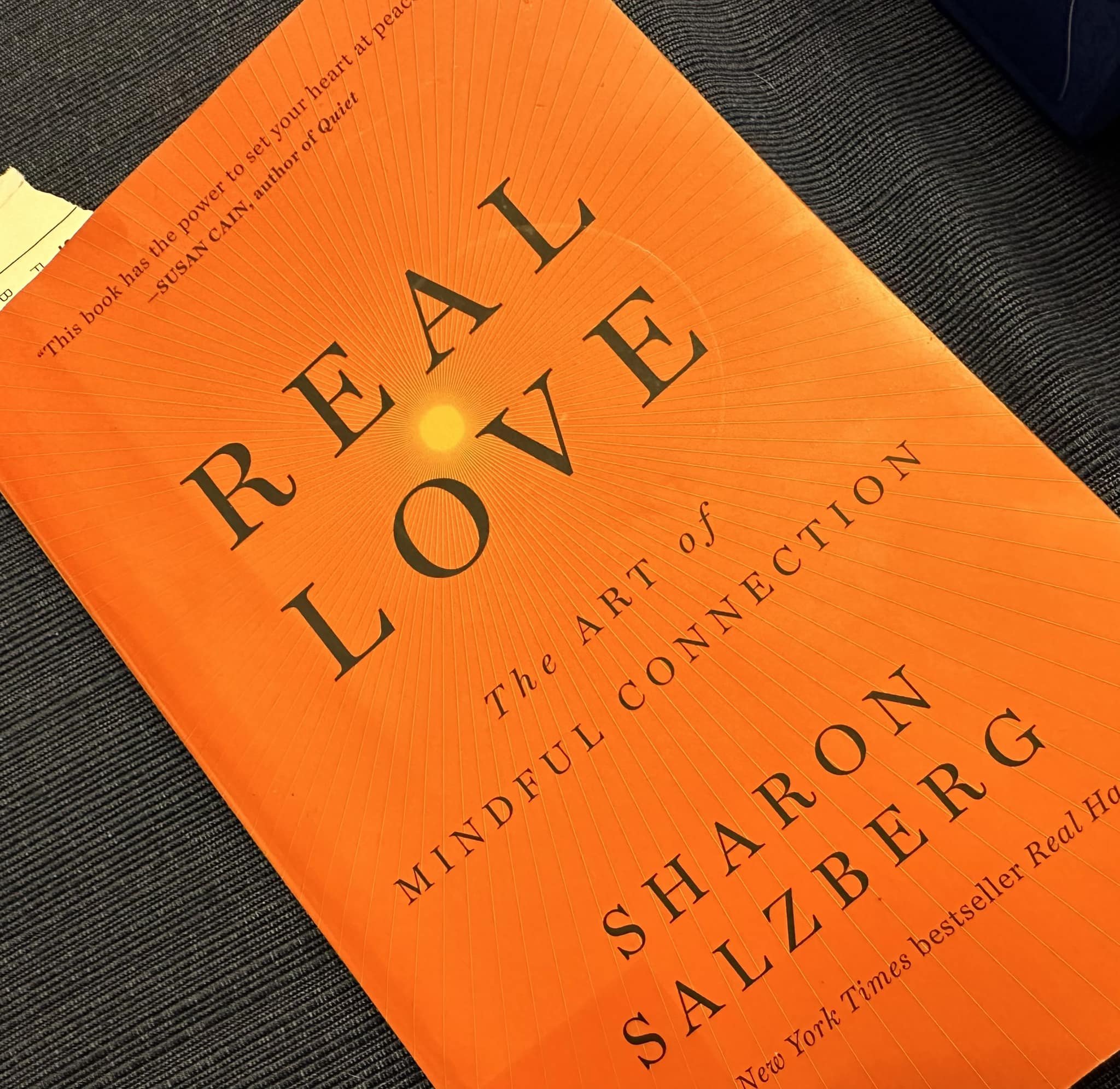
I've been reading Sharon Salzburg's book Real Love. She talks about the compassion muscle, which is a muscle we exercise when we treat ourselves with compassion. Treating ourselves with self-compassion changes our mental and physical chemistry, whereas self-criticism triggers a cascade of responses in the body that result in the flight-or-fight response.
I love Sharon's simple starting place, which is mindfulness. Simply sitting quietly and focusing on the breath is going to create the space for you to relate to yourself with compassion.
We can read books, but have to put these practices into place. A yoga practice gives us many opportunities to flex our compassion muscle.